In short: Alongside S/4HANA, the same five objections tend to stall any talk of an integrated toolchain. Each one hides a real concern, and each one has a small first step that needs no big project.
Your S/4HANA transformation is under way, and with it comes the question of how requirements, development, testing and transports fit together. Suggest looking at the toolchain at the same time, and you will hear the same sentences again and again. They are rarely wrong – there is usually a genuine worry behind them.
Five objections and what helps with each
“We have no time and no budget”
First step: start where double entry hurts most. S/4HANA ties up key users, budget and attention, so an integrated toolchain should not become a project of its own. A good place to begin is the one spot with the most duplicate work, for example between Jira and ChaRM. Every task your teams maintain once instead of twice saves time straight away.
“Our tools can’t do that”
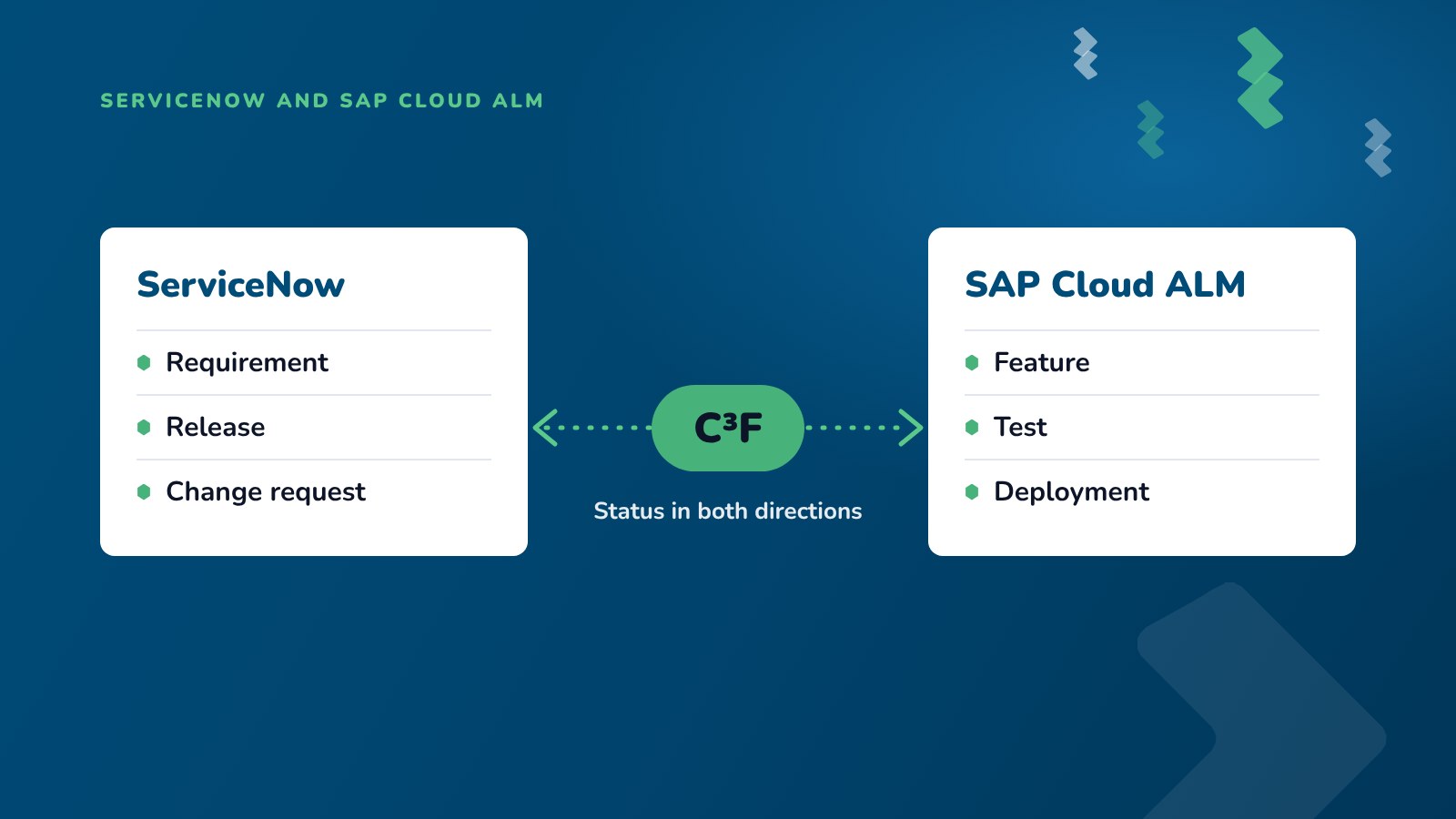
Not on their own – connected, they can. Jira, SAP Solution Manager, SAP Cloud ALM and your ITSM tool each do a lot, just not together. Cross Connector 5 (CC5) links Jira with ChaRM, and the C³ Suite links Jira with SAP Cloud ALM. Your teams keep the tools they already use.
“We’ve always done it this way”
The end of 2027 changes that anyway. Mainstream maintenance for SAP Solution Manager ends at the end of 2027. If you use ChaRM, your change management has to be reorganised regardless. The only open question is whether the move ends double entry or carries it over into a new tool.
“Department X will never go along with it”
Every team keeps its own tool. Behind this sentence is often the fear of having to give up a familiar tool. An integrated toolchain doesn’t ask for that. The business stays in Jira, the SAP team stays in SAP, and the status is kept in sync between the two.
“It’s too complex”
Start with one process. It only gets complex when you try to solve everything at once. A smaller way in:
- Map the current state.
- Prioritise the pain points.
- Begin with a single process.
After the first process, you know what the integration delivers day to day – and can decide on the next one from there.
A prioritised roadmap in one day
The workshop “Integrated Toolchain for SAP” captures your current state and pain points in a single day. It analyses your processes and tool landscape and delivers a prioritised IT roadmap with effort estimates, at a fixed price of €7,000.
Heard one of these objections in your organisation?
Tell us which one comes up most, and let’s talk about whether the workshop fits your situation.